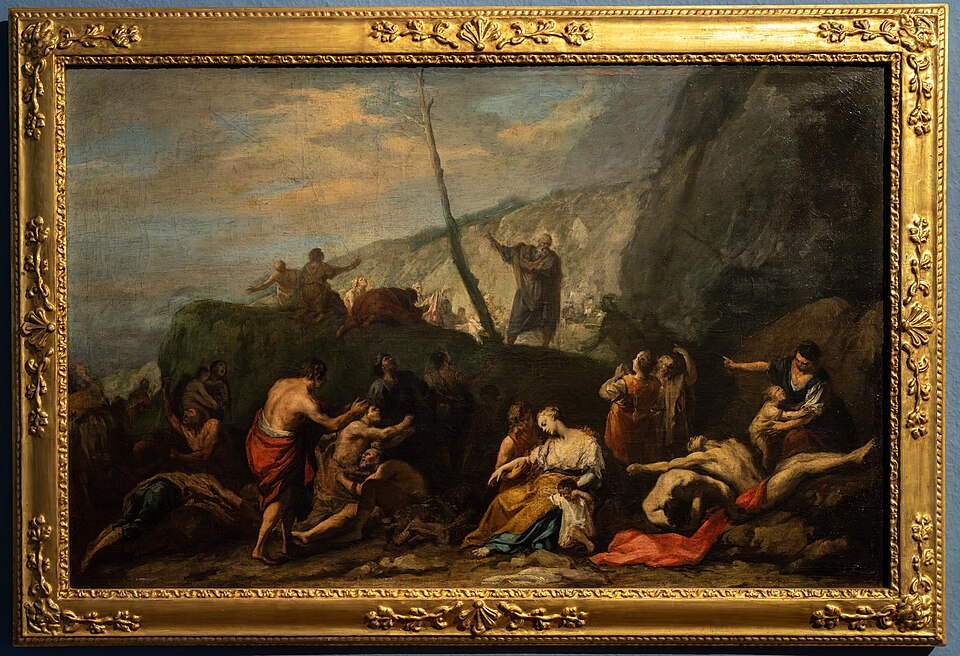
The bronze serpent Moses raised in the wilderness at God’s own command (Num 21) — a perfectly licit pointer, healing those who looked to what it pointed past itself. Israel kept it. And kept it. Until they were burning incense to it, whereupon king Hezekiah broke it to pieces and called it Nehushtan, “a thing of brass” (2 Kgs 18:4).
It is the cleanest case in the book of one object walking the whole road from door to idol with not a splinter changed in the shape of it. The bronze did not move; the worshippers’ gaze did — from pointing through the object toward an external referent (READ) to grounding in the object itself (CREATE-as-READ). The same act of veneration, the same metal, opposite operations.
The idolatry was never in the bronze.
Sources. Numbers 21:8–9 (the bronze serpent raised at command) and 2 Kings 18:4 (Hezekiah breaks it and names it Nehushtan, “a thing of brass”). Search: Numbers 21 bronze serpent pole; 2 Kings 18:4 Nehushtan Hezekiah bronze serpent.
Appears in: The Relic · Iconoclasm (the keystone case — broken once it curdled) · the hinge back to idolatry (the loop that has eaten its own tail — the ouroboros).