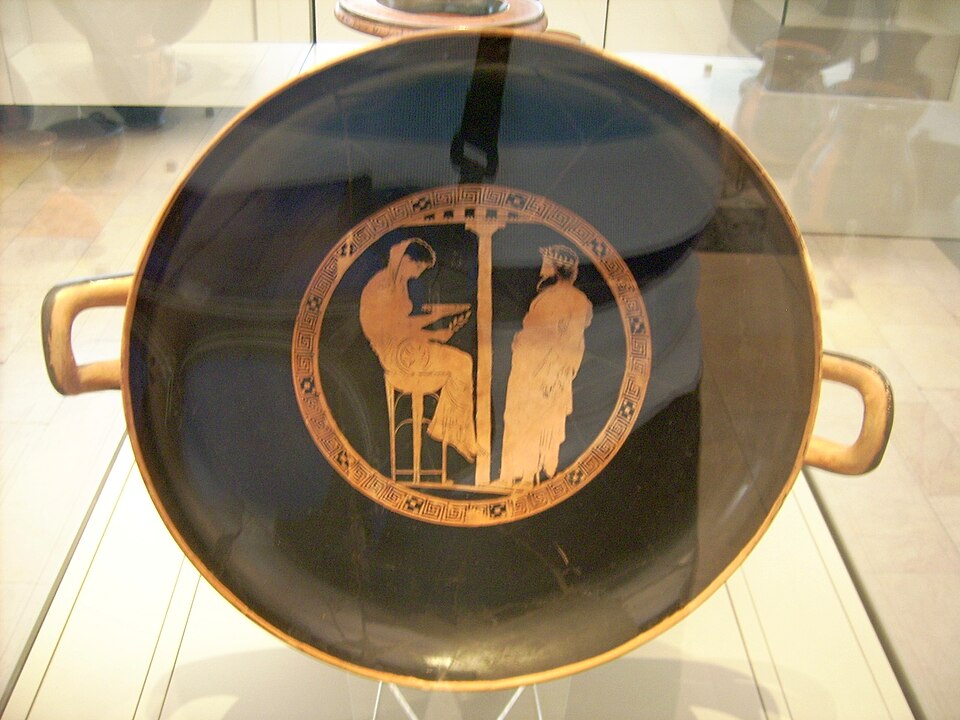
Croesus of Lydia, rich and ambitious, consulted Delphi before crossing the Halys River against Cyrus. The oracle’s answer: if he crosses, he will destroy a great empire. He crossed. He destroyed his own.
The Pythia’s gift was not foresight but grammar. An answer built so it cannot lose has cut no loop at all — the loop is the structure in which a reference might have been wrong, and an unfalsifiable word by definition never entered it. It is the ouroboros in prophetic dress: a channel that explains away every outcome feeds only on itself. The poison-fowl of the Azande does the same work with feathers; Delphi did it with hexameters and prestige.
Chapter 8 uses Delphi as the sharpest contrast to the Cyrus case: genuine prophetic provenance requires a word that could have been false and was not — a claim with a real failure-boundary, not an engineered escape hatch. The oracle’s deliberate ambiguity is not wisdom; it is a professionally maintained irrefutability, which is another name for a reference that will always, whatever happens, point back at itself. Beautiful hexameters, zero loop-cut.
Sources. Herodotus, Histories 1.53 (Croesus and “he will destroy a great empire”) and 1.86–91 (the aftermath, and Croesus’ reproach of the oracle). Search: Herodotus 1.53 Croesus Delphi destroy a great empire.
Appears in: Prophecy and Divination