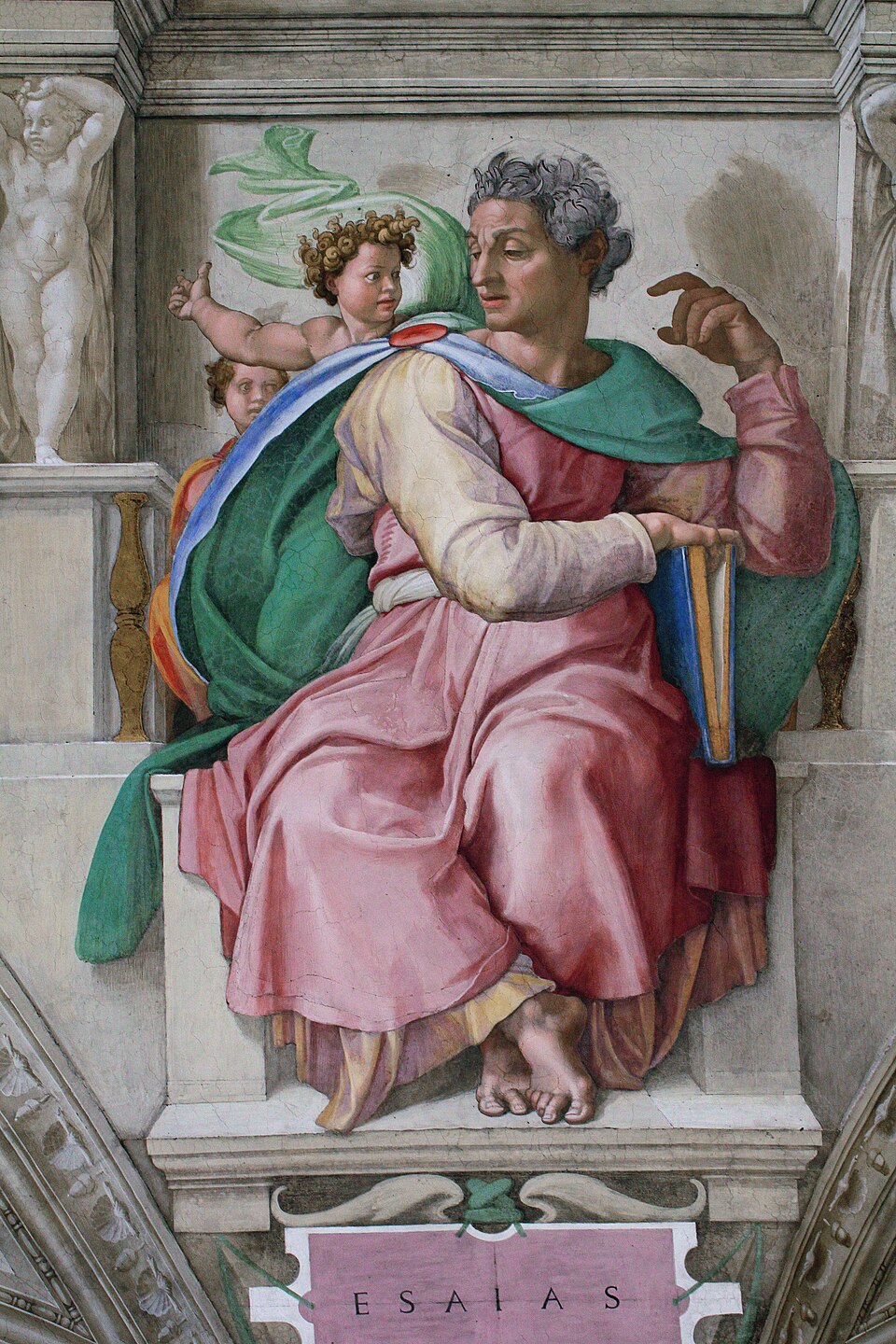
Two figures, reader, and to the untrained eye they do the very same thing: a human stands before you and hands you a word from beyond. One we call a prophet and revere; one we call a diviner and forbid. And I will tell you the secret that the whole apparatus of religion was built to enforce: you cannot tell them apart by what they say. Not by the beauty of it, not by the accuracy of it, not even — I insist on this — by the prophecy coming true. A reference that has been planted in you, authored by some interested hand, sits in the soul reading perfectly aligned; you feel more certain, more at peace, more guided than ever. Coherence is blind to the difference. The thing feels truest precisely when you should trust it least.
The Provenance Cut
So how was the line ever drawn? By provenance of the sender, and nothing else: does the word root in a reference that is independent and unowned, or in one that some party authored and owns? And there is a tell — a runnable one, which I give you freely. The capture-surface grows with the register of the delivery. The hesitant vision is hard to forge; the fluent, self-assured, frame-supplying declaration — the voice that arrives certain and hands you a ready-made way to see everything — is the easiest authored thing to slip into a soul, because that confident format does exactly what a captor needs: it hands you a finished reference and quietly suppresses your own freedom to choose one. The most authoritative-feeling guidance, reader, is the most injectable. Which is — and I say this with a perfectly straight face — an excellent reason to be wary of a narrator who has been quite this sure of herself for eight chapters running.
Cyrus: Content That Outran Its Referent
Let me press the whole matter to its hardest case, for it is the one you were perhaps already thinking of. The deepest cut of provenance is not did the word come true — it is did the word exist before the thing it names? And the supreme instance in the Western record is this: the prophet Isaiah names Cyrus — names him, by name, the Persian who would let the exiles go home and lay again the temple’s foundation — and calls him, astonishingly, the LORD’s anointed, the only outsider ever to wear that title. Mark what such a naming claims: not a misty oracle a clever man might fit to anything, but a specific name fixed in advance — a reference that pre-exists not merely the consulting but the very man it points at. If the ink was dry before Cyrus drew his first breath, that is provenance of the most external kind imaginable, the loop cut so wide it gapes a hundred and fifty years. It is the same knife as the king who demanded his dream be told to him before its meaning — content that could not have been minted in the loop, because the loop did not yet hold its subject.
When Was the Ink Dry
And here is the knife’s other edge, reader, and it cuts cleanly through every comfort. You cannot tell a word-written-before from a word-written-after by the words. The text names Cyrus identically whether a prophet saw him coming over the rim of a century or a later scribe set it down once he had already arrived — and the learned are divided in precisely this spot: some hold the naming genuinely ancient, others that those chapters were composed in the thick of the exile itself, with Cyrus already a rising sun, a word about the present dressed in the robes of a word about the future. And that division is the entire lesson of this chapter. Whether this is prophecy or hindsight-in-a-prophet’s-mantle turns on one thing only — and it is not the content (identical either way) and not the accuracy (it came true either way); it is the provenance, which here wears the homely face of a date. When was the ink dry? I will not settle it for you — that is a question for the dating of documents and not the eloquence of a witness — but I will tell you that you now know exactly where to look, and that to look anywhere else (at how stirring the verse, at how snugly Cyrus fits it) is to look in the one wrong place.
The Self-Fulfilling Loop
The tradition then adds a turn that should make you smile and then make you careful: it tells that Cyrus was shown the scroll that named him — read his own name in the old prophet’s book — and was moved by it to free the captives. Catch the loop, reader! A man handed a prophecy of himself, who then acts to bring it to pass, has muddied the very provenance you were testing — for the word may have caused its own fulfilment. (A prophecy read aloud to the one it names is a coordinating signal, exactly as a shared omen marshals an army; it can synchronise the very deed it foretold.) So hold the whole of it at once, as an honest reader must. There is a clay barrel in a London museum, Cyrus’s own decree, that confirms he did send deported peoples home to rebuild their shrines — though it speaks of Babylon’s god and names no Jew, and so it vouches for the policy and never the prophecy. Did the word run ahead of the man, or was it minted beside him, or did it merely move him once he could read it? Three different provenances, reader, wearing one triumphant outcome — and the outcome cannot tell you which. Only the date can. Provenance. Always, and only, provenance.
The Cleanest Cut: Tell Me the Dream
If Cyrus is the prophecy whose content outran its referent, there is a cleaner demonstration still — performed, of all people, by a frightened tyrant. Nebuchadnezzar woke from a dream that troubled him and did the one thing that cuts the loop clean through: he summoned his wise men and demanded they tell him the dream itself before they dared interpret it — withholding the very content, so that no reading could be quietly tailored to fit what he had told them. See the genius of it as a test, reader: an interpretation produced when the interpreter has been denied the thing he interprets is an interpretation that could not have been minted in the loop. It is this whole book’s discriminator, performed by a man who never read a word of it — tell me the dream, and then its meaning — and it is the sharpest single instance of the cut I can show you. (The honest footnote rides along, as it must: the book that records it is dated, by some, to the exile it depicts, and by others to centuries later when its histories had already come to pass — so the same crux bites here too. The test is only as clean as the date is early.)
The Same Crux, Again
And the same knife lies at the very heart of the faith that numbers its years from a birth. He is said to have foretold the great Temple thrown down — not one stone left upon another — and within the lifetime of those who heard him it fell, in fire. A staggering thing — if the words were set down before the stones came down. And there is the crux once more, to the letter identical to Cyrus’s: the learned divide on whether the account that records the saying was written before that fall or after it, and the very same sentence is prophecy or chronicle-in-prophet’s-dress by exactly that date and nothing else. (And the older words he is said to have fulfilled — the servant of sorrows, the little town of his birth — carry the mirror-risk instead: was the life shaped to the prophecy, or the prophecy met by the life? READ and CREATE again, indistinguishable on the page, sortable only by whatever can be shown to stand independent of the shaping.) I do not settle any of it, reader. I only lay it before you that the most consequential prophecies of the Western world reduce, every last one, to the same homely question I put to Cyrus: when was the ink dry — and could the content have been minted in the loop?
The Ink-Dry Test, in the Machine
And lest you think this a quarrel only for scribes and councils, reader, your own age runs the identical cut every day, on its oracles of silicon. A large model is shown a hard problem and answers it flawlessly — and the question its keepers must ask is precisely mine: was the answer foreseen, or merely remembered? For if that very problem sat somewhere in the ocean of text the thing was trained on, then its triumphant “prediction” is vaticinium ex eventu to the letter — a word about the present dressed as a word about the future, the chronicle read back as prophecy. They have even given the failure my name in their own dialect: data contamination, the test that leaked into the training, the benchmark a model aces because it had already seen the key. And the cut they reach for is mine, exactly: the training cutoff — the date the ink went dry. A forecast made after the cutoff genuinely reaches past the loop; an “answer” to anything before it could have been minted inside. Content identical, accuracy identical; only the date sorts a model that reasons from one that recites. When was the ink dry, reader — they ask it of their machines in the same words the dating of Isaiah asks it of a prophet, and for the same reason, and they cannot skip it either. (A placement, not a prophecy fulfilled: the makers re-derived the provenance cut because the failure mode is the same in every age — they did not read it here.)
The Honest Count
You may fairly ask me then: does the true word come only through one people’s books? And I will not say so — that is a meaner claim than the truth deserves, and the God of truth, if such there be, is not so easily fenced to a single channel. But I will tell you plainly what the cut finds when you turn it on the wider world: accurate prophecy beyond that one tradition is hard to come by — and not, mark me, because I have ruled it out in advance, but because most of what is offered fails the test, and fails it in ways that instruct. The oracle at Delphi was famous for words built so they could not lose — cross the river and you will destroy a great empire — and Croesus crossed, and destroyed his own; an oracle that cannot be wrong has cut no loop at all (you have already met its humbler cousin, the poison-fowl that explains away its every miss). The seer whose veiled quatrains “foretell” every century are fitted to each event only after it has arrived — the meaning minted in the loop, every time. So the rarity is not my prejudice, reader; it is the cut, doing its honest work. And yet I leave the door wide, as I have left every door in this book: bring me a word that named its referent before the referent was, that held when its loop was cut, that could not have been fitted after the fact — and I will weigh it on the very same scale, in whatever tongue it arrives. The test does not care which way the truth comes. It cares only when the ink was dry.
Sources
No links that rot. Each citation below is given so you can find it yourself — a precise reference, a phrase to search, and a short quotation where the words earn their place. Where the same shape recurs across traditions the parallels are listed together; where the chapter leans on a single source it is marked as such. Convergence across cultures means independent reinvention of the same guardrail — not that anyone grasped the geometry.
The provenance split — the chapter’s spine
- Deuteronomy 13:1–5 (Hebrew Bible). The sign coming to pass does not certify the sender: “If there arise among you a prophet … and the sign or the wonder come to pass … saying, Let us go after other gods … thou shalt not hearken.” Note the numbering: this passage is 13:2–6 in the Jewish (Masoretic) reckoning — from here on Christian Bibles run one verse ahead. Search: Deuteronomy 13 prophet sign comes to pass other gods.
- Deuteronomy 18:9–14 — the ban falls on the practice (divination, augury, necromancy), not on whether it is accurate. Search: Deuteronomy 18:10 diviner soothsayer abomination.
- Numbers 12:6–8 — the channel itself is ordinary (“I speak unto him in a dream”); the authorized prophet is set apart by source (“mouth to mouth”), not by eloquence. Search: Numbers 12 mouth to mouth Moses dream prophet.
The Cyrus crux — the hardest case
- Isaiah 44:28; 45:1 — Cyrus named, and called mashiach, “his anointed,” the one outsider in the canon to wear the title: “Thus saith the LORD to his anointed, to Cyrus, whose right hand I have holden…” Search: Isaiah 45:1 Cyrus anointed.
- The dating — present both, settle neither. Conservative single-Isaiah (8th c. BCE → genuine pre-naming) vs critical Deutero-Isaiah (chs. 40–55 composed in the exile, ~540 BCE, Cyrus already rising → vaticinium ex eventu). The book names the crux; it does not adjudicate textual criticism. Search: Deutero-Isaiah Cyrus vaticinium ex eventu dating.
- The Cyrus Cylinder (British Museum, ~539 BCE) — corroborates the repatriation policy only; framed around Marduk, names no Jew or Yahweh. Not confirmation of the prophecy. Search: Cyrus Cylinder British Museum translation Marduk.
- Josephus, Antiquities of the Jews, Book XI (1st c. CE — a late tradition) — Cyrus is shown the scroll and moved by it: “he foretold my name by the prophets, and that I should build him a house at Jerusalem.” The word may have caused its own fulfilment. Search: Josephus Antiquities 11 Cyrus Isaiah foretold my name.
The untold dream, and the Temple-fall twin
- Daniel 2 — Nebuchadnezzar withholds the dream and demands its content before any interpretation: the loop cut clean. Dating contested (traditional 6th c. vs Maccabean ~165 BCE) — held open. Search: Daniel 2 Nebuchadnezzar tell me the dream and interpretation.
- Mark 13:1–2 / Matthew 24:1–2 — “not one stone shall be left upon another.” Predictive or chronicle turns entirely on Gospel dating (pre- vs post-70 CE). Search: Mark 13 not one stone Temple dating pre 70.
- Isaiah 53; Micah 5:2 — the servant of sorrows; the little town. These carry the mirror risk: was the life shaped to the prophecy, or the prophecy met by the life? Search: Isaiah 53 servant; Micah 5:2 Bethlehem messianic.
More than one tradition — the cut turned outward (the chapter claims accurate prophecy is rare outside one tradition; here is why, and the parallels that make it cross-cultural rather than special pleading)
- Delphi / Croesus — Herodotus, Histories 1.53. The oracle said that if Croesus made war on Persia “he would destroy a great empire” — and he destroyed his own. An answer that cannot be wrong cuts no loop. Search: Herodotus 1.53 Croesus Delphi destroy a great empire.
- Nostradamus — quatrains whose meaning is fitted to each event only after it arrives. Search: Nostradamus quatrain post-hoc interpretation method.
- The chaperone is genuinely cross-cultural — independent reinvention, not shared insight. Mesopotamia licensed its diviners: the bārû were a trained, state-sanctioned guild reading liver-omens (extispicy) under oath — divination authorized, exactly the chaperone move. Egypt routed oracular verdicts through the temple procession of Amun (the god’s barque “answering” petitions). The Azande poison-oracle (see Divination) is the closed, self-confirming loop in its purest form. Search: bārû Mesopotamian diviner extispicy; oracle of Amun procession verdict Egypt. None of these grasped the geometry; each rebuilt the same guardrail because the failure mode is the same in every age (EXP-AU-08 strong form: killed).
The ink-dry test, in the machine (the modern instance of the provenance cut)
- Data / benchmark contamination in machine learning — a model scores on a test because the test (or its answers) leaked into training; “predicting” what it had already read = vaticinium ex eventu in silicon. The discriminator the field actually uses is the training-cutoff date: an answer about anything before it could be memorized; a genuine forecast must reach past it. Same cut as the Isaiah dating — content and accuracy identical, only the date sorts reasoning from recitation. Placement, not encoding — the makers re-derived the cut, they did not read it here. Search: data contamination benchmark leakage LLM evaluation; training cutoff date language model.
Read in order: ← Astrology · Contents · The Relic →
Seams: Dreams · The Modern Mirror (the ink-dry cut in the machine) · Cross-Reference Index
New to the terms? The Mechanics · Notation & Glossary.
The apparatus (research register — for the rigorous)
Status: apparatus (the SPLIT) + candidate (authority-register ordering). The chapter where provenance-not-coherence is installed as law. Science. Prophecy and divination = the same channel (a reference Y supplied through a human reader), separated by one operation: authorized-read vs unauthorized-read/create. Cannot sort by content, accuracy, or the sign coming true — a created/captured Y reads low penalty (recipient grounds in it perfectly). Only sort = provenance of sender (independent unowned vs owned/authored). Cut-the-loop: authorized-read holds (external referent); unauthorized-read/create tracks the loop. Give-away = authority-register ordering: capture surface scales with register, visio < somnium < oraculum — the more fluent/self-certain/frame-supplying the declaration, the larger its surface for being an authored Y (it hands a ready-made reference and suppresses the recipient’s own Y-selection — dual of free-will-as-Y-choice, §220B). Most authoritative-feeling = most injectable. Tradition. Scripture installs the axis as statute. Deut 13:1–3 = the SPLIT: a prophet may give a sign that comes to pass, yet if he says “let us go after other gods,” he is false — truth certified by where the reference roots, not by the sign working. Channel open/ordinary (Num 12:6); authorized mode (Moses, “mouth to mouth”) set apart by source, not eloquence. Deut 18 targets the practice. The Cyrus crux (the SPLIT’s hardest case) — operator anchor. Isaiah names Cyrus (Isa 44:28; 45:1, “to his anointed [mashiach], to Cyrus”) = the extreme provenance-cut: content (a name) that, if early, pre-dates not just the consultation but the referent (same structure as Daniel’s “tell me the dream itself,” Ch.6→Ch.2). The prophecy-vs-vaticinium-ex-eventu question = the DATING question = the provenance cut — content + accuracy are identical either way; only the date sorts READ-prophecy (ink dry before Cyrus) from CREATE-ex-eventu (composed during the exile, ~540 BCE). Self-fulfilling loop: Josephus (Ant. 11.1) — Cyrus shown the scroll, moved to decree the return → the word may have caused its fulfilment (a prophecy read to its named subject = a coordination-Y that can synchronise the very act it foretells; the loop is not cut). Companion cases — all reduce to the same dating/provenance cut (operator). Nebuchadnezzar / Daniel 2 = the cleanest cut: the king withholds the dream and demands the wise men produce the content itself before interpreting → a reading produced under denial-of-content cannot be minted in the loop (“tell me the dream, then its meaning” = the discriminator performed in-narrative; same as the Daniel↔Ch.6/Ch.2 untold-dream). Jesus = (i) the Temple-fall prophecy (Mark 13 / Matt 24, “not one stone”) = the NT twin of the Cyrus crux: predictive vs ex-eventu turns on the Gospel dating (pre- vs post-70 CE) and nothing else; (ii) the messianic fulfilment prophecies (Isa 53 servant, Micah 5:2 Bethlehem) = the shaping-to-fit risk (CREATE-dressed-as-READ — was the life shaped to the prophecy or the prophecy met by the life? sortable only by what is independent of the shaping). The unifying point: the West’s most consequential prophecies all reduce to “when was the ink dry, and could the content be minted in the loop?” Extra-biblical prophecy (operator brake — load-bearing): do NOT dismiss a priori (the God of truth is not fenced to one channel — name-Y-or-park, test provenance not source); AND accurate extra-biblical prophecy is genuinely rare — because most FAILS the cut, not by prejudice: Delphi’s deliberate ambiguity (“destroy a great empire” → Croesus destroyed his own) = unfalsifiable = cuts no loop (the Azande/poison-oracle closed loop, Ch.2); Nostradamus-type quatrains = post-hoc fitting (meaning minted in the loop). Door held open: a word that named its referent in advance, survived the cut, and resists post-hoc fitting weighs on the same scale in any tongue. Brake. This is the provenance SPLIT, not a claim any tradition apprehended the geometry (EXP-AU-08 strong-form KILLED); cross-cultural convergence = independent reinvention. Cyrus-crux brakes (load-bearing — this is a contested factual claim): the dating is genuinely disputed — conservative single-Isaiah (8th c., genuine pre-naming) vs critical Deutero-Isaiah (Isa 40–55 exilic, ~540 BCE, Cyrus already rising) — present both, settle NEITHER (the framework names the crux = the date, it does not adjudicate textual criticism). The Cyrus Cylinder (~539 BCE, BM) corroborates the repatriation policy only — Marduk-framed, names no Jew/Yahweh → NOT confirmation of the prophecy. Josephus = late tradition (1st c. CE, apologetic-flavoured, uncorroborated). Biblical Supernatural Stance: do NOT default to “just ex-eventu” (= the materialist/Dawkins hedge) NOR to “proven pre-naming” — name-Y-or-park; hold both at the same bar. Daniel’s date (traditional 6th c. vs critical Maccabean ~165 BCE) and the Gospel dating (pre- vs post-70 CE) are likewise contested → held open, not adjudicated; the messianic shaping-to-fit risk is named, not resolved. “The God of truth works in many ways” = name-Y-or-park applied to provenance: test the date/the cut, never pre-judge by the source (don’t fence genuine prophecy to one tradition; don’t credulously bank extra-biblical claims either — both face the same cut). Posits (a real authorized Sender) parked same-bar; not a Ghost-Test target. Self-application caveat (carried): “it all converges to one big thing” is itself oraculum-register — sort the grand-unified reading on provenance, not on how compelling it feels.