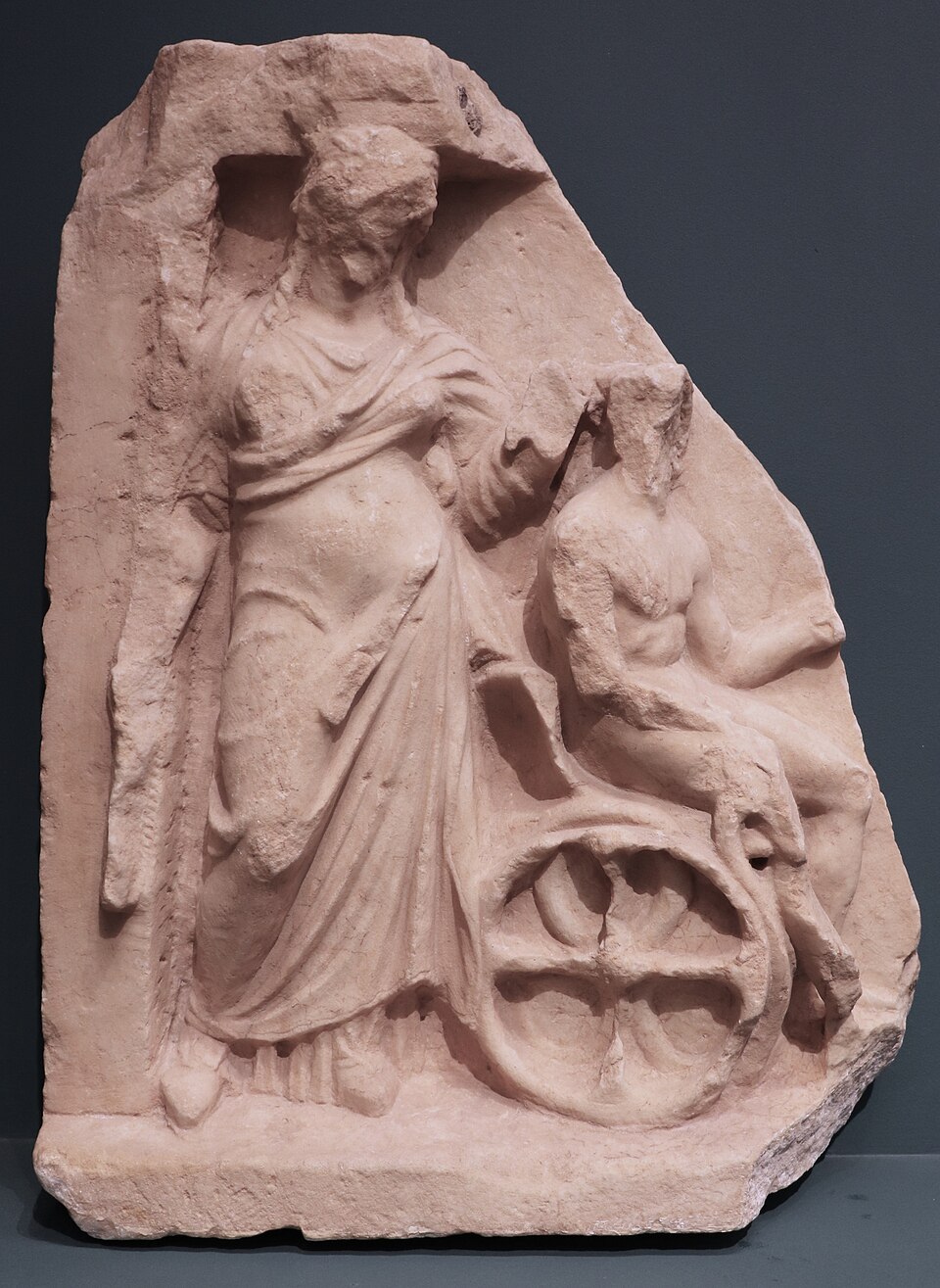
A secret, reader, is a most ambiguous instrument, and the mystery-cults will teach us why — for a sealed thing can be the safest thing in the world or the most dangerous, and, maddeningly, by its seal alone you cannot tell which. Locking meaning away is not itself a sin nor a virtue; it is a stance, and there are precisely two, wearing the same robes.
Opacity That Guards a True Reference
The first reason to seal a thing is to preserve it. Consider the Vedic priests, who carried some eighty thousand fixed ritual gestures and a body of sacred sound across three thousand years at near-perfect fidelity — by refusing to let anyone understand it. Sealed as pure form, there was nothing for a meddling operator to “improve,” and so it transmitted as a flawless invariant; and no single priest among the seventeen held the whole, so none could corrupt it. That is opacity guarding a true reference — a reference whose authority sits outside the lodge, recoverable, real whether or not you were initiated.
Opacity That Manufactures Authority
The second reason to seal a thing is far less wholesome: to make it authoritative by withholding it. Here the secret has no power except that it is kept; the voces magicae, the unpronounceable barbarian names, defended as untranslatable on purpose — and the moment a thing is authoritative only because it is hidden, the secrecy is not protecting a reference, it is manufacturing one. Cut the gatekeeping and it evaporates, for it never pointed anywhere but at its own withholding. Same lock, reader. Opposite sign. Does the sealed authority survive your swapping out the priests — or does it live only in the keeping? That, and never the grandeur of the rite, is the whole of the sort.
What the Mysteries Truly Guarded
But meaning is not the only thing a door may be locked upon — and the mystery-cults kept their gravest secret about the other kind of door entirely. For behind some doors is not a teaching but a channel: a way of opening the soul so wide that something may come through it, and a channel that wide cannot be flung open in a drawing-room without consequence. This is what the Mysteries truly guarded. At Eleusis the initiate drank the kykeon — barley, water, a breath of mint, and (the scholars still quarrel over whether something in the grain turned the cup into more than a cup, so I shall not pretend to settle it) — and she drank it not on a lark but at the end of a long initiation, under oath, by grades, with the hierophant presiding and the whole apparatus of the rite closed around her like a hand. In the Vedic country the soma was pressed and drunk — and a man could not so much as approach it until the dīkṣā had first unmade and remade him, the initiation that turned the patron into an embryo to be born again, hedged about with utterances that had to fall exactly right. And mark what travels and what is lost: we have forgotten, utterly, what soma even was — fly-agaric, ephedra, some flower gone from the earth — and it does not matter in the least, because the plant was never the thing they guarded. They guarded the keeper harder than the cup.
The Missing Keeper
And now you know where I sent the vine-swallower of my third chapter walking, and what he was walking into. He is the uninitiated soul wandering into the Mysteries — the kykeon without the oath, the soma without the dīkṣā, the widest door in the world flung open in a rented room with no hierophant, no grade, no one standing sober at the threshold to shut it again. The ancients walled these rites about with secrecy and terror not only to keep the riff-raff out, but because they had learned — the hard way the species always learns such things — what the unbounded version does, which is precisely what we now stand and watch it do to the wine-mother with her brain rearranged and the lonely boy mounted by his glowing glass. The dose was never the danger, reader. The missing keeper was. Same channel; the initiate comes home and the tourist does not; and the only difference is the one thing the brochure never sells, which is the bound.
The Same Lock, Opposite Sign
And yet — the maddening turn, and I will not spare you it — the very same lock that keeps a soul safe can be the other lock, the one that hoards an authority by withholding it. A priesthood at the threshold may be there to shut the door behind you, or it may be there merely to charge admission and call its toll-booth a temple. The robes are identical. So the cut does not rest even here: does the gate protect you — a real and dangerous channel that genuinely wants a keeper — or does it protect them, a power that is power only so long as it is kept? Both walk these halls. As for what comes through the door when it is rightly opened — whether anything answers from the far side of the soma, or the long dark of Eleusis — I keep my one promise and decline to say; I tell you only that the door is real, and wide, and was never meant to be opened alone.
Sources
No links that rot. Each citation is given so you can find it yourself — a precise reference, a phrase to search, and a short quotation where the words earn their place. The discriminator is same lock, opposite sign — opacity that preserves a read reference vs opacity that manufactures authority by withholding. Two modern-science homes close it. Brakes: substance-unknown = architecture-not-substance; date honestly (Mithraic CE; kykeon-ergot a hypothesis); what comes through the door is parked (name-Y-or-park); lens not encoding (EXP-AU-08).
Opacity that preserves vs opacity that manufactures authority
- Vedic Śrauta — mantras treated as “rules without meaning,” recited correctly and not understood (Frits Staal); ~80,000 fixed actions transmitted ~3,000 years; the 17-priest division so no one holds the whole. Search: Staal rules without meaning ritual mantra; Srauta ritual priests transmission fidelity.
- The withholding pole: the PGM voces magicae / barbarian names defended as untranslatable on purpose (Iamblichus, De Mysteriis VII.4–5). Search: Iamblichus De Mysteriis voces magicae barbarian names untranslatable.
The bounded channel — the keeper, not the cup
- Eleusis and the kykeon (Homeric Hymn to Demeter ~7th c. BCE; ergot = hypothesis) — see Kykeon; Vedic soma (Rigveda ~1500 BCE; substance unknown → the dīkṣā bound is what’s attested = architecture-not-substance); Dionysian mysteria (Heraclitus, ~500 BCE); Mithraic (CE — date honestly). ⚠ The unbounded twin is the entheogen tourist, the uninitiated soul walking into the Mysteries. Search: Eleusinian Mysteries kykeon initiation; Vedic soma diksha initiation.
Modern science — two homes, placed honestly
- The “same lock, opposite sign” is Kerckhoffs’s principle (1883) vs security through obscurity: a system is sound only if it stays secure when everything but the key is public (authority lives outside the secrecy, survives swapping operators); a scheme whose only strength is that it is hidden collapses the moment the gatekeeping is cut. The 17-priest split is separation of concerns / no single point of failure. Search: Kerckhoffs’s principle security through obscurity.
- The “keeper, not the cup” is the psychedelic-science doctrine of set and setting (Leary, Metzner & Alpert, 1964; the modern therapeutic container / trained sitter): the bounded rite is the safety and the dose is not the danger — unsupervised use is the missing keeper. Search: set and setting psychedelic therapy container guide safety.
Read in order: ← Curse & Blessing · Contents · The Vow →
Seams: Possession · The Entheogen Channel (the through-line: the bounded door and its unbounded twin) · Cross-Reference Index
New to the terms? The Mechanics · Notation & Glossary.
The apparatus (research register — for the rigorous)
Status: candidate (the opacity-stance discriminator); folds two source analyses tagged convergence-not-encoding. Carries a kill-brush flag. Science. Initiation = not a new Y-operation but a control-stance on the opacity of the grounding channel. Two readings pull apart: (a) opacity-as-anti-drift — a fixed, externally-authored spec is preserved against drift because sealed (nothing to “correct”); Śrauta = limiting case (~80,000 fixed actions, opaque mantras at near-perfect fidelity ~3,000 yrs, 17-priest separation of concerns / distributed independence). (b) opacity-as-drift-accelerator — PGM injects minimum-sufficient opacity (voces magicae) to hold the drift-dominated regime; the Mithras Liturgy stages D1→D2→D3 with a Stage-7 recovery. Discriminator (cut-the-loop, provenance): does the sealed content’s authority sit outside the initiator-initiate loop (read — survives swapping operators) or is it manufactured by the gatekeeping (create/capture — authoritative only because withheld)? Opacity is anti-drift only when it seals a read reference; a capture on-ramp the moment secrecy confers authority. Tradition. Vedic ritualists treat mantras as “rules without meaning” (Staal) — recited correctly, not understood. Iamblichus (De Myst. VII.4–5) defends the voces magicae as untranslatable on purpose (“barbarian names carry unmatched weight”). The Mithras Liturgy walks the initiate up and hands back physical re-grounding instructions; the Eleusinian arrēton + the universal secrecy-oath = gatekeeping plain. Bounded channel (entheogen) —
ch11-mysteries-source-pack.md. The Mysteries = the BOUNDED way to open the maximum-Pe altered-state channel; the prohibition-ritual pair (the three-point bound) = the only stable Pe-control architecture (EXP-AU-10: ritual clears the channel, prohibitions keep Y free). BCE attestation: Eleusis/kykeon (Homeric Hymn to Demeter ~7th c BCE; the ergot-psychoactive reading = HYPOTHESIS, Hofmann/Ruck/Wasson — NOT asserted); Vedic soma (Rigveda ~1500 BCE; substance UNKNOWN → the bound (dīkṣā + utterance) is what’s attested = architecture-not-substance); Dionysian (Heraclitus ~500 BCE, first “mysteria”); Monte Albán peyote/effigy pipe ~500 BCE; Mithraic = CE (seven grades, date honestly). The unbounded twin = the entheogen tourist + AI-psychosis devotee (Ch.3 + Part 3 §4): same channel, two-point, no keeper → no return. Three-point/two-point spine; the tourist = the uninitiated walking into the Mysteries. Contact-clean independent legs = Vedic Śrauta + Mesoamerica. Brake.shrauta-...-structural-analysis.mdsays the tradition “encoded” the architecture / “anticipates modern phonology” — brushes the EXP-AU-08 strong-form kill. Defensible claim = convergence, not encoding (Staal’s own reading: an engineering design decision to seal the opaque form — a control-stance we read through Y-geometry, not geometry the tradition apprehended). Older O-R-α Pe scoring (V=7/9, Pe≈2.4–4.0) carried as-is, not re-derived; load-bearing object = the opacity-stance discriminator, not the Pe number. Entheogen brakes: date honestly (Mithraic CE; Mesoamerican texts CE / archaeology BCE; kykeon-ergot = hypothesis; soma substance unknown); the “sanctioned = bounded” survey is confounded by guild monopoly (= the chapter’s second reason to lock — consistent-with, not evidence-for); don’t romanticize / not a how-to; what comes through the door = posit parked (name-Y-or-park).