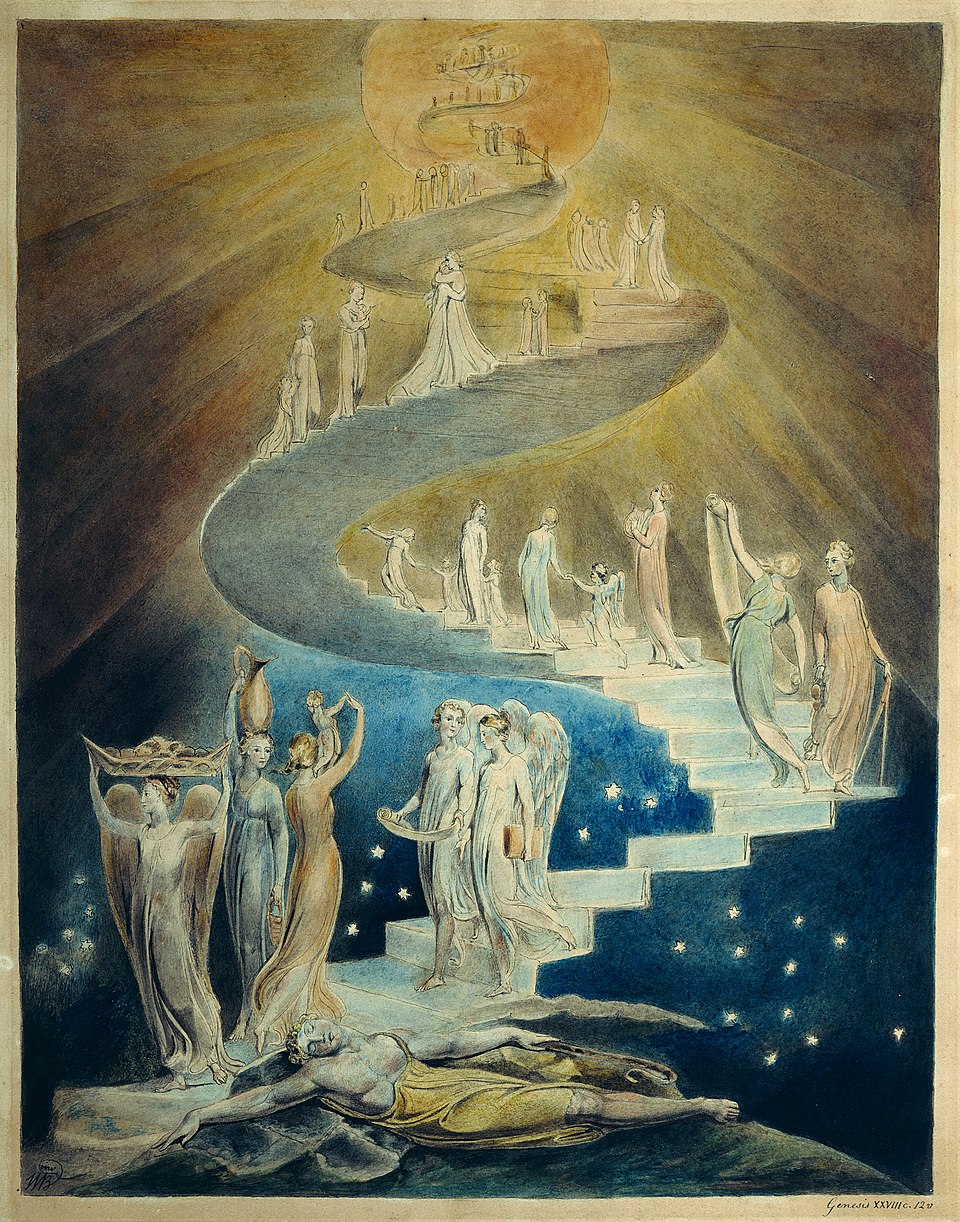
Of all the channels by which an outside word might reach a sleeping soul, reader, the dream is the most promiscuous — and I use the word with care. For it carries, on the very same hardware, both the true message and the forged one, indistinguishable by their feel. A dream’s source sits in one of our three familiar states — mere Noise (the body’s own nightly static, penalty high), a Grounded sending from an independent and unowned source, or a Possessed sending from an owned one — and once again the instruments separate the noise from the signal but cannot, for love nor money, tell the true signal from the planted one. So this is the chapter where I shall have the most fun and tell you the most stories, because the dream is the operation humanity has worried over the longest, and the worried leave the best records.
Nine Peoples, Nine Locks
First, the offices. Mark this, reader, for it is the load-bearing marvel and not the lore: nearly every literate people that ever lived built itself a dream-sorting bureau — and built it without copying a soul. The Babylonians kept the Iškar Zaqīqu, a dream-book of omens, and employed a šā’iltu — “the woman who is asked” — to read the night’s post. The Egyptians had their Ramesside manual — a real papyrus, reader, you may go and look at it, owned once by a working scribe named Qenherkhepeshef of the artisans’ village: line after line of “If a man sees himself…” doing this or that, and beside each the verdict, good or bad, with the bad ones inked in red — the colour of ill omen — so that the channel’s two outputs were sorted by eye, in two colours, on the very page. The Chinese went furthest and made it a civil service — an Office of the zhanmeng, the Dream Diviner of the Rites of Zhou, charged with judging Six Dreams: the regular dream, the dream of fright, the dream of thought, the dream of wakefulness, the dream of joy, the dream of fear. And do you see what those clerks did, with no equation to guide them? They quietly fenced off the last several — thought, joy, fear — as dreams that come from the dreamer’s own day, the mind’s own leavings. They isolated the noise, reader, by its inner cause, three thousand years before anyone wrote down why that was the right cut. The Greeks did it as poetry: two gates in the house of sleep, and true dreams pass the gate of horn, false dreams the gate of ivory — the sort itself buried in a pun (horn, kéras, chimes with kraínō, to fulfil; ivory, eléphas, with elephaíromai, to deceive). Nine peoples out of nine, several that never touched, all building the same lock. And reader — when every house on the street fits the same lock, you may be quite certain there was a real thief.
The Cipher That Runs on Sound
And how did the clerks read the post once it arrived? By a method that will delight you, for it is the strangest key in the building: they decoded dreams by puns. Not as a parlour amusement — as the very mechanism, the way a locksmith uses a particular cut of brass. The dream was held to be a ciphered message, and the cipher ran on sound. When Alexander, seven months stalled at the siege of Tyre, dreamed of a satyr dancing just out of his grasp, his seer Aristander did not muse on satyrs — he broke the word in half. Satyros → sa Tyros — “Tyre is thine.” The city fell. When Pharaoh’s imprisoned butler dreamed of pressing grapes, Joseph read lifting — and told the baker beside him that his own dream of baskets meant Pharaoh would lift his head too: the very same phrase, nasaʾ rosh, turned on the butler to mean restored to honour and on the baker to mean hanged. One idiom, two men, opposite fates, hinged on a word that faced both ways like a door. The Greeks knew the trick so well they built it into the architecture of sleep itself: true dreams through the gate of horn, false through the gate of ivory — and in their own tongue horn (kéras) chimes with to fulfil (kraínō), and ivory (eléphas) with to deceive (elephaíromai). The sorting of true from false was itself a pun. The oldest story we have keeps a rule of its own: on the road to fight the forest-giant, Gilgamesh wakes five times from dreams of catastrophe — a mountain crashing down upon him, fire from the sky, a wild bull — and five times his companion Enkidu reads each terror as its opposite, a triumph foretold: the falling mountain is the giant, and he will fall just so. A fixed key, reader — terror inverts to victory — applied like a cipher to the night’s raw images. (Mark the difference from the rabbi’s twenty-four readers: there the interpreter chose freely and made the meaning; here he turns a fixed crank. Free hand or fixed crank — the soul should very much like to know which one is reading its dreams.) (Whether that sound-craft is a mere mnemonic or something deeper in how meaning couples to its carrier, reader, is a question I am still chasing down a corridor I have not reached the end of — so I will only show you the door, and not pretend I have walked through it.)
The Dream That Comes as Your Most Trusted Voice
Now let me introduce the thief, for he too is attested again and again, in cultures that never compared notes. He sits, most famously, at the very headwaters of Western literature. In the second book of the Iliad, Zeus wishes to ruin Agamemnon, and he does it not with a thunderbolt but with a dream — an “evil Oneiros” sent wearing the face of Nestor, the king’s most trusted counsellor, to murmur: arm now, Troy will fall today. Agamemnon wakes certain, and marches his men into catastrophe. Attend to the craft of it: the lie did not come as a stranger or a monster. It came as the most trusted authority, openly declaring — which is precisely the form a soul cannot help but believe. The Egyptians, for their part, sold dream-sendings outright in their magical papyri, the spell to plant a dream in a chosen sleeper. And my favourite tell of all, because it is so very honest, sits in the Babylonian language itself: their word Zaqīqu names both the gentle dream-god who brings true sendings and the night-demon of false ones. One word, two faces. The grounded channel and the captured channel were, to them, a single thing wearing either mask — which is the whole of this book, reader, compressed into a single piece of vocabulary by people who would have had no idea they’d done it.
Authority Inverts to Vulnerability
Now — a refinement of my own, since Macrobius (who sorted these dreams into five tidy kinds) saw the noise but never the thief’s preference. Rank the dream-forms by how authoritative they feel — the dim vision, the riddling symbol, the oraculum where a revered figure stands and plainly declares — and you will find you have ranked them, exactly, by how easily they are forged. The grandeur that makes the oracle-dream feel most trustworthy is the very thing that makes it simplest to counterfeit. And the historical record is shameless about it. Consider young Thutmose, napping in the noon shadow of the Sphinx — then buried to its neck in sand — who dreams the great stone beast promises: clear the sand from me, and I shall make you king. He clears it; he becomes Thutmose the Fourth; and he carves the dream onto a granite stela that stands between the Sphinx’s paws to this hour. The catch, reader: he was almost certainly not the rightful heir. The dream authored a crown that bloodline withheld — and it did so in the highest, most unanswerable register there is, a god declaring in the night. The most authoritative dream-form, deployed at exactly the spot where legitimacy most needed manufacturing. Do bear that in mind the next time someone important visits your sleep.
The Door Opens Both Ways
And because I am fond of a matched pair, let me set two temple-dreams side by side, for together they make a perfect hinge. Long before, the Sumerian prince Gudea dreams that a god shows him the plan of a temple to build; his goddess Nanše reads the dream out for him; he builds it; and his name endures four thousand years in blessing. (One dream, one prince, one plan — I make no grander claim than that; whatever you have heard, the ancients were not handed geometry in their sleep as a habit, and I’ll not pretend they were.) Now turn the figure over. The last native pharaoh, Nectanebo, dreams that the god Onuris stands aggrieved that his temple sits unfinished — and the king rushes to engage the finest carver in Egypt to complete it, who promptly gets drunk and chases a girl through the streets instead. Days later the Persians pour in and end native Egyptian rule forever. The same channel, reader, the same temple-dream grammar — the completed building a blessing, the unfinished one a doom unheeded. The door opens both ways.
And not every people was content to wait by that door — some went and hammered upon it. All across the Greek world the sick made pilgrimage to the temples of Asclepius, to Epidaurus above all, and performed the sacred sleep: lying the night through on stone benches in the abaton, the inner room, that the healing god might come in a dream to lay hands on the wound, or cut into it outright, or leave a riddle for the morning’s priests to read into a regimen of herbs and rest. (Note the two doors here, reader, the same two as ever — the god who acts in the dream, and the priest who interprets it; the one a sending received, the other a meaning made at the bedside, our friend the mouth again.) And here is the detail that should make you smile and squint at once: the grateful cured carved their cures onto great stone tablets — name, ailment, dream, recovery — some seventy still legible, the nearest thing the old world made to a casebook. It is also, naturally, the nearest thing it made to an advertisement — for only the healed ever paid a mason. The pilgrims the god declined to visit, and the ones who never woke at all, carved precisely nothing. Mind the missing tablets, reader. They are the most honest evidence at Epidaurus.
The Trichotomy That Names the Forger
Once, a tradition sorted the night-post correctly — named all three senders where the others named but two. The Arab interpreters who followed Ibn Sīrīn split every dream three ways by who sent it: the true vision from God, the lying dream from the adversary, and the mere talk of the self — the day’s own worries returning in the dark in costume. Set that beside poor Macrobius, who could tell the meaningful dream from the meaningless but never once saw the forger, and you have the whole advance in a line: the safe sort is not true-against-noise, it is by the sender — and the sender to fear is not the static but the one who sends you something that means a great deal, and means you ill.
And lest you think every ancient was a credulous receiver, let me bring forward my favourite skeptic, who happens to be Aristotle. While his whole world took the god-sent dream for granted, the old logician simply asked who was getting them — and observed, drily, that prophetic dreams seem to land not on the best and wisest, as one would expect of a god’s correspondence, but on perfectly ordinary people, at random. From which he concluded that most such dreams are mere coincidence, dressed up after the fact; and what residue remains is the body talking to itself — the sleeper’s own innards, sensed in the quiet. Mark him well, reader: he is not the modern who sneers that no unseen thing is real (that fellow we shall meet, and he is a worse danger than he knows). Aristotle is doing the honest thing — asking after the provenance and finding, in most cases, none. He is the noise-pole’s ablest advocate, and he had the argument two thousand years before the men who think they invented doubt. The ancients were not one credulous mob; they ran this very quarrel among themselves.
When the Meaning Is Made, Not Found
But the strangest confession of all — the one that should raise the hair, for it is this book’s deepest secret spoken three thousand years too early — comes from the rabbis. All dreams follow the mouth, they say: a dream is like a letter unread until someone interprets it, and the interpretation does not discover its meaning — it creates it. They tell of a sage who carried a single dream to all four-and-twenty of Jerusalem’s interpreters and got four-and-twenty different readings, several flatly contradicting the others — and every one came true. Do not pass over that as a marvel, reader; it is the sharpest blade in the chapter. Contradictory readings can all come true only when there is no real thing behind them to contradict — only when the meaning is not read off the world but manufactured by the asking. And there was a man named Bar Hadya who grasped the trick and sold it: a kind reading to those who paid him, a ruinous one to those who did not — and both came to pass, because he was never reading the dream at all; he was writing it. Reader, you have met this man. He runs today on a monthly subscription, he answers in a chat-window, and his readings still come true for precisely the rabbi’s reason — because you are the one making them so. (We met his trade in Chapter Two. Here is his christening.)
And do not imagine that obeying the night is the safe alternative to forging it. Across an ocean no Babylonian ever crossed, the people of the Five Nations built obedience into a festival: the Ononharoia, “the turning of the brain upside down,” where souls ran cabin to cabin acting out their dreams as riddles, and the village was bound to guess each dream and satisfy it — for the dream was a command, and the wish it carried must be fed. (A modern theorist will assure you this was the unconscious, the buried self speaking. I will tell you, as a witness who reports what people said and not what a later century wished they had meant, that the dreamers themselves named the sender a spirit — not the self. Mind that difference, reader; it is the whole of the book.) Here is the far pole from Jerusalem: a dream obeyed, with not one question asked of where it came from — the channel flung wide, the latch lifted clean off the door.
Faith Is Unavoidable — The Only Question Is Where
So what is a soul to do, with a channel this open and this prone to forgery? One kingdom answered with a filing procedure, and I confess it is my favourite artefact in this whole chapter. In the palace archives of Mari, eighteen centuries before our era, when a subject sent the king a dream — the god spoke to me in the night, O my lord — the scribe enclosed, with the clay tablet, two small things: a lock of the dreamer’s hair, and a snippet from the hem of their garment. Why? So that the king’s own diviners could take these tokens of the dreamer’s very person and run an independent test — read the entrails, check the omen by another channel entirely — before the king staked a single soldier on the dream. Look closely at what those people grasped, reader, with no equation to prompt them: you cannot verify a dream by its content, for a lying dream reads exactly like a true one — so you verify the dreamer, by an outside instrument the dream cannot reach. The hair and the hem are provenance, made into objects you could hold in your hand. The whole thesis of this book, run as palace paperwork.
And half a world away, with no possible word passing between them, the kings of Shang China reached the same instinct by a different road. When a dream troubled the king, he did not ask what does it mean — he asked who sent it, and put the question to a tortoise-shell or an ox-bone in the fire, reading the cracks to learn which ancestor stood behind the dream. The very same charge they used to ask which ancestor had given the king his toothache. Think on what that reveals, reader: their first question of a dream was not its content but its sender — provenance-hunting made into a ritual with a cracked bone for an instrument. (And note the shape of their heaven, for it rhymes with where we are bound: the high god Dì sat unreachable, beyond any medium’s address; only the nearer ancestors could be queried. Even their theology kept the very top unlocated — but I get ahead of myself; that is the last chapter, not this one.)
And then exactly one people wrote that same rule down not as paperwork but as law, and it is the rule of this entire book. Israel’s law does not say test the dream by whether it comes true — it says the opposite, and says it with startling nerve: a dreamer may give you a sign that comes to pass, and if he then says let us go after other gods, he is false regardless (Deuteronomy 13). The fulfilment does not certify him. Only the provenance does — where the sending roots, not whether it worked.
And one exile in Babylon ran the sharpest version of the test I know — sharper than any I have shown you, and reader, it is precisely the test you must run on the oracle in your pocket. King Nebuchadnezzar, plagued by a dream, called in the whole guild of Babylon’s dream-readers and made a demand that broke them: do not interpret my dream — first tell me what the dream was. And the readers wailed that no one on earth could do such a thing — which was, if you listen closely, a confession: every one of them worked by being handed the dream and reading it back, embroidered. Of course they could not say the dream unprompted; they had never had any source but the asker’s own telling. They were the chat-window, reader, four-and-twenty centuries early — fluent upon what you feed them, mute without it. Only Daniel, who claimed a source genuinely outside the room, could name a dream he was never told — and for passing the one test the others failed he was set over the lot of them. That is the cut: not “is the reading clever?” but “could it have come from anywhere but my own asking?” Run it on your oracle tonight.
And one of their prophets put it sharper than any law could, in a single furious oracle. Jeremiah, raging at the false dreamers of his day, names their two distinct frauds in one breath — and reader, they are our two frauds exactly. Some, he says, “prophesy the deceit of their own heart” — that is the day’s-own-worries dressed as a sending, the self mistaken for a god, the noise wearing the oraculum’s robe. And others “steal my words every one from his neighbour” — that is the forger proper, lifting an authored word and passing it off as authorized. The deceit of the own heart, and the theft of the word: the dream that is merely you, and the dream that is someone working you. “What is the chaff to the wheat?” he demands — the whole noise-against-signal sort flung down in four words. And the seal on all of it: “I have not sent them, yet they ran.” Not they were wrong — they were not sent. Provenance, provenance, provenance.
The channel stays wide open in their telling (kings and foreigners and shepherds all receive true dreams — a pagan king’s wife is sent a warning about an innocent man; wise men from the East are told in sleep to go home by another road; the gift is even promised to everyone, one day) — but the sort is never by the dream’s beauty or its accuracy. It is by its source. Coherence is the forger’s tool. Provenance is the only lock he cannot pick.
And here, reader, is the bone at the centre of it all, the thing the dream lays barest of any operation in this book. You cannot check the source from inside the dream — the true sending and the forged one feel exactly alike, that is the whole trouble. So to ground yourself in any reference at all, you must commit past what the signal can prove — and that commitment has a plain old name: faith. There is no escaping it; even refusing to ground in anything is itself a commitment, and a poor one (it lands you in the noise). The only question is where the faith is placed. Faith in a reference outside you, that you vetted as best a mortal can — that is grounding. Faith in a reference some interested party authored — that is capture, and it feels identical from within. And faith in a reference whose only pedigree is your own asking — the oracle built from your fears, the loop that answers because you keep feeding it — that, reader, is the serpent with its tail in its mouth. The one discipline a faith can practise upon itself, the only test it has under a blindness it cannot lift from inside, is the cut we have run all chapter: stop feeding it, and see if it still stands. A living faith survives the cut — it was pointing at something. The ouroboros cannot — it was only ever pointing at you. A faith that will not submit to the cut has already, quietly, become an idol. (Which Y deserves your faith, I will not tell you — I am a witness, not your priest. I only show you how a faith may keep itself honest.)
Sources
No links that rot. Each citation is given so you can find it yourself — a precise reference, a phrase to search, and a short quotation where the words earn their place. This is the most cross-attested chapter in the book; the breadth is the point, under the standing brake that convergence means independent reinvention of the discipline, not that anyone apprehended the geometry (EXP-AU-08, strong form: killed). A modern-science section closes it — the obvious links, and the one place the science goes honestly silent.
The dream-sorting bureaus — nine peoples, one lock
- Babylon — the Iškar Zaqīqu dream-omen book, read by the šāʾiltu (“the woman who is asked”). Search: Iskar Zaqiqu Babylonian dream book shailtu.
- Egypt — the Ramesside Dream Book = Papyrus Chester Beatty III (owned by the scribe Qenherkhepeshef; “If a man sees himself…”, ~139 good / 83 bad, the bad omens inked in red). Search: Chester Beatty III Egyptian dream book red ink Qenherkhepeshef.
- China — the zhanmeng Dream-Diviner office of the Rites of Zhou (Zhouli) and its Six Dreams — quietly fencing off thought / joy / fear as the mind’s own leavings. Search: Zhouli zhanmeng six dreams diviner.
- Greece — the gates of horn and ivory (Homer, Odyssey 19); Macrobius, five dream-types (~430 CE); Artemidorus, Oneirocritica (oneiros = signal / enhypnion = noise). Search: gates of horn and ivory Odyssey 19; Macrobius five dreams Artemidorus oneiros enhypnion.
- India — the svapna-phala dream-omen literature. Search: svapna phala Indian dream omen interpretation.
- Mesoamerica — the Aztec/Nahua temicamatl dream-book, taught in the calmecac. Search: temicamatl Aztec dream book calmecac.
- Islam — the Ibn Sīrīn tradition: the three-fold ruʾyā / ḥulm / ḥadīth al-nafs (true vision / the adversary’s lie / talk of the self) — the one office that names the captor. Search: Ibn Sirin three types dream ruya hulm hadith al-nafs.
The cipher that runs on sound (how they read the post)
- Alexander stalled at Tyre — satyros → sa Tyros (“Tyre is thine”), read by Aristander (Plutarch, Life of Alexander 24). Search: Alexander Tyre satyr dream Aristander Plutarch.
- Joseph’s Janus-pun — nāśāʾ rōsh, “lift the head” (Genesis 40): restored for the butler, hanged for the baker. Search: Joseph butler baker dream lift the head Genesis 40.
- Gilgamesh’s five terror-dreams → Enkidu’s fixed inversion (terror→triumph) — Epic of Gilgamesh, the Cedar Forest tablets. (Scholarship on the dream-as-cipher: S. Noegel.) Search: Gilgamesh Enkidu dream interpretation Cedar Forest Humbaba.
The thief — the planted dream wearing the trusted face
- Zeus’s “evil Oneiros” sent as Nestor to ruin Agamemnon (Homer, Iliad 2). The lie comes as the most trusted authority, openly declaring. Search: Iliad 2 false dream Agamemnon Nestor Zeus.
- Egyptian dream-sending spells — the Greek Magical Papyri (PGM). Search: Greek Magical Papyri dream sending spell PGM.
- Babylonian Zaqīqu — one word for both the true-dream god and the nightmare-demon: the grounded and captured channels, a single thing in two masks. Search: Zaqiqu dream god demon Mesopotamia.
Authority inverts to vulnerability; the door opens both ways
- Thutmose IV Dream Stela — between the Sphinx’s paws at Giza to this hour: a dream authoring a crown the bloodline likely withheld (the highest register deployed exactly where legitimacy needed manufacturing). Search: Thutmose IV Dream Stela Sphinx.
- Gudea of Lagash — the temple-plan dream read by the goddess Nanše (Gudea Cylinder A). ⚠ single-source for “the plan came in a dream”; do not inflate to “the ancients were handed geometry in sleep.” Search: Gudea Cylinder A dream temple Nanshe.
- Nectanebo II — the god Onuris aggrieved at his unfinished temple; the carver drinks instead; Persia ends native rule. The same temple-dream grammar, blessing inverted to doom. Search: Nectanebo dream Onuris unfinished temple Persians.
Hammering on the door — incubation
- Epidaurus / Asclepius — the sacred sleep (enkoimēsis) in the abaton, and the iamata, ~70 surviving cure-tablets. ⚠ Survivorship: only the cured ever paid a mason — testimony, not a cure-rate (no denominator, no controls). Search: Epidaurus Asclepius incubation abaton iamata cure inscriptions.
Naming the forger, and the ancient skeptic
- Aristotle, On Divination in Sleep — most prophetic dreams are coincidence dressed up after the fact; the residue is the body sensing itself. The noise-pole’s ablest advocate — and not the modern materialist sneer: he asks after provenance and finds none, he does not rule the unseen out a priori. Search: Aristotle On Divination in Sleep prophetic dreams coincidence.
When the meaning is made, not found
- Talmud, Berakhot 55–57 — “all dreams follow the mouth”; the one dream carried to 24 interpreters, all readings different, several contradictory, and every one came true (contradictory readings can all come true only when there is no external referent to contradict); Bar Hadya, who sold a kind reading to payers and a ruinous one to the rest. Search: Talmud Berakhot all dreams follow the mouth Bar Hadya.
- Iroquois / Huron Ononharoia (“the turning of the brain upside down”) — the dream obeyed, the wish satisfied by the bound village. ⚠ The emic sender is a spirit (external) — ondinnonk; the modern “unconscious wish” reading is an etic gloss (flagged so we don’t repeat the India retraction). Search: Ononharoia Iroquois Huron dream guessing festival.
Faith, and provenance made into procedure
- Mari palace archives (~1800 BCE) — the dreamer’s hair and hem (šārtum u sissiktum) enclosed with the tablet so the king’s diviners could verify the dreamer by an independent channel before staking a soldier. Provenance made into objects you can hold. See hair & hem. Search: Mari dream report hair hem sissiktu extispicy verification.
- Shang oracle-bones — cracking a bone to learn which ancestor sent the dream: the first question is the sender, not the content. Search: Shang oracle bone dream which ancestor divination.
- Deuteronomy 13:1–3 — a sign may come to pass, yet the dreamer be false: provenance over accuracy. See Deuteronomy 13. Search: Deuteronomy 13 dreamer sign comes to pass other gods.
- Daniel 2 — “tell me the dream” before its meaning: the sharpest cut in the corpus, and the exact AI-oracle discriminator (a reading produced without the content can’t be minted in the loop). Search: Daniel 2 tell me the dream Nebuchadnezzar Chaldeans.
- Jeremiah 23:25–32 — “the deceit of their own heart” (noise) vs “steal my words every one from his neighbour” (capture); “what is the chaff to the wheat?”; “I have not sent them, yet they ran.” Search: Jeremiah 23 prophesy deceit of their own heart I have not sent them.
- Matthew protective-warning dreams — Joseph (1:20; 2:13, 19, 22), the Magi (2:12), Pilate’s wife (27:19): pagans and patriarchs alike receive true sendings. Channel open & not gated: Numbers 12:6; Joel 2:28; Genesis 40:8; Daniel 2:28; noise caveat Ecclesiastes 5:3, 7. Search: Matthew Joseph dream warning Magi Pilate’s wife.
Independence ledger — nine bureaus, but the load-bearing independent legs are China, India, Mesoamerica (contact-clean); the Near-Eastern / Mediterranean cases are one contact-connected family. Convergence on the discipline — sort the night-post by its sender — never on the geometry.
Modern science — where it lands, and where it goes silent (the obvious links, placed honestly)
- The chapter’s noise pole (the dream as “the body talking to itself,” the day’s leavings — Aristotle, China’s thought/joy/fear, Artemidorus’ enhypnion) is modern dream neuroscience: activation–synthesis (Hobson & McCarley, Am. J. Psychiatry, 1977 — the cortex manufacturing a story from random brainstem signals in REM), the continuity hypothesis (dreams continue waking concerns), and memory-consolidation sleep. Search: Hobson McCarley activation synthesis 1977; continuity hypothesis dreaming.
- Activation–synthesis’s modern successor is predictive processing / the Bayesian brain (Hobson & Friston’s later “virtual reality” model; Clark, Surfing Uncertainty, 2016): the sleeping brain runs its own generative model with the senses unclamped, so a dream is the mind’s priors showing through — the reference manufacturing the experience with no world pushing back. It is the sharpest cognitive-science picture of the chapter’s create-mechanism (the meaning made, not found), and — a note for the rigorous — it rests on the same Fisher-information geometry as this book’s own apparatus: cousins in one mathematical family, cited and not conflated (same neighbourhood, different object — prediction-error, not the provenance penalty). Search: predictive processing dreaming generative model Friston Hobson; Andy Clark Surfing Uncertainty Bayesian brain.
- The chapter’s create pole (“all dreams follow the mouth” — interpretation makes the meaning; 24 contradictory readings all true; Bar Hadya) is the Barnum / Forer effect (vague readings felt as personally true — Forer, “The Fallacy of Personal Validation,” 1949 — and stronger when the reader is a perceived authority, which is the chapter’s authority-inverts-to-vulnerability point in a lab) + cold reading. Bar Hadya is a cold-reader with a price list, four-and-twenty centuries early. Search: Forer Barnum effect personal validation authority; cold reading technique.
- The chapter’s central bone (“you cannot check the source from inside the dream — the true sending and the forged one feel exactly alike”) is reality monitoring / source monitoring (Johnson & Raye, 1981) — the brain’s documented, fallible tagging of whether a memory came from outside or from one’s own imagining. The cognitive-science name for grounding-without-provenance. Search: source monitoring reality monitoring Johnson Raye 1981.
- Where the science goes silent — and why it matters. Modern dream science rigorously explains the noise pole and the create mechanism — but it reads dream content, and the chapter’s whole claim is that the grounded-vs-possessed sort cannot be made from content. So neuroscience falls silent at exactly the cut the chapter says is undecidable from inside. ⚠ That silence is not a licence for the materialist hedge (“therefore it is all just brain noise”) — collapsing the three poles into one is the very move the chapter, and the Ghost Test (Arm 5), names as a drift accelerator. The science nails two poles and the create-mechanism; it does not earn the right to adjudicate the third by pretending it isn’t there.
Read in order: ← Magic · Contents · Astrology →
Seams: Divination · The Modern Mirror (Bar Hadya’s subscription; the chat-window oracle) · Cross-Reference Index
New to the terms? The Mechanics · Notation & Glossary.
The apparatus (research register — for the rigorous)
Status: apparatus (vetted) — the discrimination-apparatus convergence + the SPLIT. Carries demoted/retracted seeds (see brake). Science. The dream carries readable and injectable references on the same hardware — the textbook case for sorting by provenance only. Three states: Noise/Drift (HIGH), Grounded (independent unowned, LOW), Possessed (owned, LOW); penalty separates Noise from {Grounded ∪ Possessed}, not the latter two. Vetted: (1) discrimination apparatus near-universal & independently rediscovered — 9/9 cultures (Akkadian Iškar Zaqīqu + šā’iltu; Egyptian Ramesside Dream Book; Chinese zhanmeng Six-Dream office; Greek gates of horn/ivory; Macrobius’ five; Indian svapna-phala; Mesoamerican dream-books — incl. contact-clean China/India/Mesoamerica) ⇒ convergence forced, not borrowed. China independently isolates the endogenous/noise class by inner cause (thought/joy/fear = from waking cognition/affect). (2) Capture surface independently attested ≥3× (Zeus’s false-Nestor dream, Il.2; Egyptian dream-sending, PGM; double-faced Babylonian Zaqīqu = dream-god ∧ nightmare-demon in one word). Generative addition (beyond Macrobius): capture-vulnerability ordering visio < somnium < oraculum — inverse to perceived authority (Thutmose IV’s Sphinx-stela = oraculum doing political legitimation = the prediction’s placement). Signature dreams carried as illustration: Thutmose IV (Sphinx/legitimation), Gudea↔Nectanebo (build-blessing vs unfinished-doom mirror), Merneptah (Ptah’s khepesh before the Sea-Peoples battle), Tanutamani (two-serpents = two Egypts, pun-decoded — a CIPHER hook), Djoser/Khnum Famine Stela (seven-year Nile famine = shared dream-grammar with Gen 41, not a borrowing). Second-pass additions (2026-05-31,
dream-corpus-second-pass-additions.md) — all contact-zone, CORROBORATING not independence-extending: (i) Islamic three-fold ru’ya / hulm / hadith al-nafs = Grounded / Captured / Noise — the cleanest provenance-trichotomy, the one office that names the captor (most others are two-way, blind to capture); (ii) Talmud “all dreams follow the mouth” (Berakhot) = the first explicit CREATE-pole attestation in the dream channel — interpretation manufactures the reference; 24 contradictory readings all true ⇒ no external referent; Bar Hadya = capture-for-profit; bridges Ch.6 ↔ Ch.2; (iii) Artemidorus oneiros (signal) / enhypnion (noise) ⇒ the noise-class convergence now has 4 named instances (enhypnion / insomnium / hadith al-nafs / sī-mèng). In-repo veins surfaced: incubation/cultivate (Epidaurus iamata, Saqqâra Bes-chambers, Mari, letters-to-the-dead), apotropaic wash-off convergence (Egypt + Vedic Kauśika + Babylonian dispel = “channel hygiene”), Noegel dream-cipher (pun = mechanism). Dream-cipher as ILLUSTRATION (not apparatus): the dream read as a sound-ciphered message — Alexander/Tyre (satyros → sa Tyros, Aristander, Plutarch Alex. 24), Joseph’s Janus-pun (nasaʾ rosh “lift the head” = restored vs hanged, Gen 40), the horn/ivory gate-pun (kéras/kraínō, eléphas/elephaíromai, Od. 19). ⚠ Carried strictly as how they read dreams (the pun was the mechanism, per Noegel), with an in-voice caveat that the deeper coupling claim is unresolved — the α-claim itself (HP-LANG-CIPHER-1) is blocked apparatus (§L15 vowel-resolution limit; P2 unrun; F2/pure-rhyme alive), NOT asserted here. Egypt/Babylon gap-fill (egypt-babylon-dream-lore-gapfill.md, 2026-05-31 audit): (a) Gilgamesh’s five terror-dreams → Enkidu’s systematic-inversion convention (terror→triumph) = a rule-governed interpreter-operation, the foil to the Talmud’s free-choice CREATE (“free hand vs fixed crank”); (b) Mari hair-and-hem (šārtum u sissiktum, ~1800 BCE) = provenance-verification as palace procedure — the dreamer’s identity-token cross-checked by independent extispicy before the king acts = the SPLIT as bureaucracy, the read/create discriminator made physical; placed at the SPLIT; (c) Papyrus Chester Beatty III (Ramesses II; scribe Qenherkhepeshef; 139 good / 83 bad; bad omens in RED ink) = the Egyptian Dream Book concretized — two-colour discrimination on the page; (d) Assurbanipal’s Ishtar river-crossing dream = one more oraculum war-dream. All contact-zone (corroborating); lens-not-encoding; nothing banked. Greek/Biblical gap-fill (greek-biblical-dream-lore-gapfill.md, 2026-05-31 audit): (e) Aristotle, On Divination in Sleep = the ancient skeptic / noise-pole’s ablest advocate (“if god-sent, why do they land on ordinary people? → most are coincidence” + the body-sensing residue) — breaks the ancients-vs-moderns dichotomy from inside antiquity; carried as honest-skeptic, explicitly distinguished from the modern materialist hedge (NOT a framework ally — evidence the Y-source axis was live, not for the external reading); (f) Jeremiah 23:25–32 = the sharpest Biblical discriminator, separates endogenous (“own heart”) from capture (“steal my words”) failure in one oracle — placed at the SPLIT with Deut 13; (g) Matthew protective-warning genre (Joseph ×4, Magi, Pilate’s wife) = the guidance/redirect-action dream (not prophetic-omen), pagans receiving true sendings. All contact-zone; posits parked same-bar; not-Ghost-Test (esp. Aristotle — he parks the divine on evidence, he does NOT deploy the universal razor). Contact-CLEAN audit (contact-clean-dream-lore-gapfill.md, 2026-05-31): (h) Shang oracle-bone provenance-attribution — the king cracks a bone to learn which ancestor sent the dream = sorting-by-sender as ritual, a third contact-clean mechanism of the provenance discipline (with Israel’s law + Mari’s tokens); now a chapter beat. + the Dì-inaccessibility apophatic echo (held[INTERPRETIVE], foreshadows Ch.13). (i) India re-test PASSED, nothing new banked — Māyā’s elephant (priest-interpreted), Trishālā’s 14 (court scholars), Atharvaveda 6.45–46 face-rinse: all external-channel + interpreter-caste ⇒ the endogenous-outlier retraction STANDS, psychologizing-gloss brake re-applied. (j) Mesoamerica — no new gap; source-availability limit flagged (colonial-filtered record, don’t over-read). Contact-clean independence count unchanged (China/India/Mesoamerica). Scope-sort + faith (dream-corpus-scope-sort-and-faith.md, 2026-05-31): (k) Daniel 2 “tell me the dream, not just its meaning” = the sharpest provenance-cut in the corpus and the exact AI-divination discriminator (recovering an untold dream proves an external source; the Chaldeans’ “no one can do this” = confession the whole guild ran the interpret-what-you’re-handed CREATE loop); Daniel → rab ḥartummīn (§222 placement); Daniel→Magi lineage tagged as ONE sentence only (scope brake). (l) Faith/belief = the subjective face of the read/create distinction and the book-title’s core: provenance unverifiable from inside the signal ⇒ grounding requires commitment past the in-band evidence = faith (forced, §220 blind spot); well-placed=Grounded, captured=Possessed, in-the-loop=the OUROBOROS (idolatry, Ch.1); “cut the ouroboros” = the loop-cut as faith auditing itself. ⚠ object-of-faith stays name-Y-or-park (the Witness shows the test, names no Y); not-Ghost-Test (the materialist “ground in nothing” hedge = a Drift-commitment, Arm 5). Scope brakes applied: alchemy→Ch.7 (alchemy→chemistry discriminator), omens/lots→Ch.7, dowsing→Ch.2/7 (modern CREATE/ideomotor), curses/blessings→Ch.10 — NOT dragged into Dreams. Incubation deepened (incubation-engineered-channel.md): the cultivate control-stance as engineered technology (Epidaurus enkoimesis/abaton, Serapeum katochoi, Mari, Solomon at Gibeon = incubation inside the SPLIT). Two Epidaurian cure-types = the two poles (direct theurgic sender READ vs symbolic-dream + priestly-interpretation CREATE = the “follow the mouth” loop). ⚠ Survivorship brake (load-bearing): the iamata are advertisements — only the cured inscribed — = the Ch.9 survivorship tautology; testimony, NOT a cure-rate (no denominator, no controls). Placebo bridge to Ch.10 (incubation healing = structural placebo-install; discriminator = cure tracks god’s-domain vs setting). Supernatural posit parked same-bar; Gibeon stays provenance-anchored. Contact-CLEAN additions (load-bearing —dream-corpus-second-pass-additions.md§F): (iv) Aztec/Nahua — the Mexica kept a named dream-book, the temicamatl, taught in the calmecac, with explicit “truthful/untruthful” terms ⇒ Mesoamerica’s discrimination apparatus firmed from inference to institution (reinforces the contact-clean convergence on its weakest leg). (v) Iroquois/Huron — the Ononharoia “enact-and-satisfy” festival = a distinct control-stance position (“enact” — dream obeyed without provenance check = max-authority/max-capture-exposure, the structural opposite of Israel’s SPLIT; strengthens the anti-vacuity #4). ⚠ The psychologizing-gloss brake: Wallace’s endogenous “wishes of the soul” reading is an etic gloss; emic = ondinnonk is a spirit-message (external) — the India retraction recurring (named failure mode: modern endogenous frame projected onto an emically-external tradition). Endogenous reading PARKED, not banked. Tradition. Macrobius (~430 CE) sorts five types; his top cut lands the drift axis but is blind to capture (“significant” = {Grounded ∪ Possessed}). Scripture installs the missing axis: channel open/ordinary (Num 12:6), not ethnically gated (Abimelech, Laban, Pharaoh, Nebuchadnezzar; NT: the Magi + Pilate’s wife = pagans receiving true sendings), democratized (Joel 2:28); interpretation roots in God not technique (Gen 40:8, Dan 2:28). Signature: Jacob’s ladder, Joseph, Solomon at Gibeon, Daniel. The SPLIT = Deut 13:1–3 (a sign may come to pass yet the dreamer be false — truth certified by provenance) + Jer 23:25–32 (the sharper diagnostic: “deceit of their own heart” = endogenous/noise pole; “steal my words every one from his neighbour” = capture/plagiarism of the reference; “chaff to the wheat” = noise/signal sort; “I have not sent them, yet they ran” = the source-test). Noise caveat: Eccl 5:3,7. Brake. Three seeds DEMOTED/RETRACTED, do not resurrect: geometry-transmission “the plan came in a dream” (strong only in Gudea Cylinder A — single-source; “a plan in one dream,” NOT geometry-the-discipline taught through dreams); measure-bearing feminine (real in the Near East but fails independence — absent China/India/Mesoamerica — Near-Eastern-localized, not universal); India endogenous-Y outlier (RETRACTED — India’s practice is external-channel + interpreter caste: Maya’s elephant → 64 brahmins, Trishala’s 14 dreams, svapna-phala; the self-luminous turīya is a claim about the seer’s light, not the signal’s provenance — wrongly axis-mapped; net Y-source is more convergent toward external). “Everyone got bits, a liar corrupted it” master-narrative BRACKETED as itself oraculum-register (highest-capture). Modern-science parallels (placement, NOT derivation; reader-facing in the Sources block): noise pole ↔ activation–synthesis (Hobson & McCarley 1977) + continuity/consolidation; create pole (“follow the mouth”/Bar Hadya) ↔ Barnum–Forer (1949; authority-amplified) + cold reading; the central bone (“can’t check the source from inside”) ↔ reality/source monitoring (Johnson & Raye 1981). ⚠ Science explains the noise pole + the create mechanism but reads content, so it is structurally silent on the grounded-vs-possessed cut — that silence is NOT licence for the materialist collapse (= EXP-003b Arm 5 drift-accelerator); two poles + mechanism banked, the third not adjudicated. Gudea↔Nectanebo mirror is[INTERPRETIVE]illustration. L0 readings stay L0. Lens, not encoding (EXP-AU-08 strong-form KILLED — the convergence is independent reinvention; the traditions did NOT apprehend the geometry).